Modern telephony has become far more than simply making and receiving calls. With hybrid working, Microsoft Teams, AI-powered features and rising expectations around service delivery, today’s phone systems play a vital role in helping charities support beneficiaries, volunteers and donors.
To better understand the challenges organisations are facing, we recently conducted our Charity Telephony Survey 2026. Thank you to everyone who took the time to share their experiences.
Here’s what we discovered.
Telephony Remains Business Critical
For the majority of organisations, their phone system is an essential part of delivering services.
- 66% said their phone system is either critical or important to day-to-day operations.
- Only a small number described it as having low importance.
Whether supporting vulnerable beneficiaries, managing enquiries or coordinating staff, telephony continues to be a core business tool for charities.
Hosted Telephony is Now the Norm
Traditional phone systems are continuing to decline.
Our survey found:
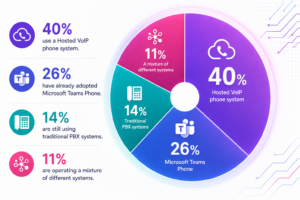
- 40% use a Hosted VoIP phone system.
- 26% have already adopted Microsoft Teams Phone.
- 14% are still using traditional PBX systems.
- 11% are operating a mixture of different systems.
This highlights the ongoing move towards cloud-based communications as charities look for greater flexibility and easier remote working.
Satisfaction is Generally High, but Challenges Remain
The good news is that most organisations are happy with their current solution, with over two-thirds saying they are fairly or very satisfied.
However, many charities still experience day-to-day frustrations, including:
- Routing calls to the right person.
- Supporting hybrid and remote workers.
- Managing multiple disconnected systems.
- Handling busy periods and missed calls.
- Poor call quality and unreliable connections.
- Limited reporting and analytics.
These are often operational challenges rather than technology failures, suggesting many organisations have systems that work, but don’t yet deliver everything modern teams need.
Reporting and Microsoft Teams Integration Top the Wishlist
When asked what features they would most like to see in a future phone system, several clear priorities emerged.
The most requested features were:
- Better call reporting and dashboards.
- Microsoft Teams integration.
- SMS and WhatsApp integration.
- Call queues and intelligent auto-attendants.
- Call recording.
- AI-powered assistance.
This reflects a growing demand for communication platforms that integrate seamlessly with existing Microsoft 365 environments while providing better visibility and automation.
AI is Moving from Curiosity to Practical Value
One of the most interesting findings was the level of interest in AI-powered telephony.
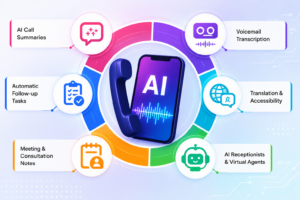
The features charities were most interested in included:
- AI-generated call summaries.
- Voicemail transcription.
- Automatic follow-up task creation.
- Translation and accessibility features.
- Meeting and consultation notes.
- AI receptionists and virtual agents.
Rather than replacing people, charities are looking for AI to reduce administration, improve accessibility and help teams spend more time supporting the people who matter most.
Cost is Still the Biggest Driver for Change
When considering a future phone system review, organisations identified several key reasons for switching providers or platforms.
The biggest factors were:
- Cost savings.
- Access to better features.
- Improved reporting.
- Organisational growth or change.
- Better support for hybrid working.
- Microsoft Teams integration.
While budgets remain under pressure across the sector, charities are clearly looking for value rather than simply the lowest price.
Our Thoughts
The survey shows that charity telephony is evolving quickly.
Today’s organisations are no longer looking for a phone system that simply makes calls. They want a communications platform that integrates with Microsoft Teams, supports hybrid working, provides meaningful reporting and uses AI to remove repetitive administrative tasks.
As AI capabilities continue to develop, features such as call summaries, voicemail transcription and intelligent routing are becoming practical tools that can save time, improve service quality and help stretched teams focus on delivering impact.
Thank you again to everyone who completed the Charity Telephony Survey 2026. We hope these findings provide useful insight into how the sector is approaching telephony today, and where it’s heading next.