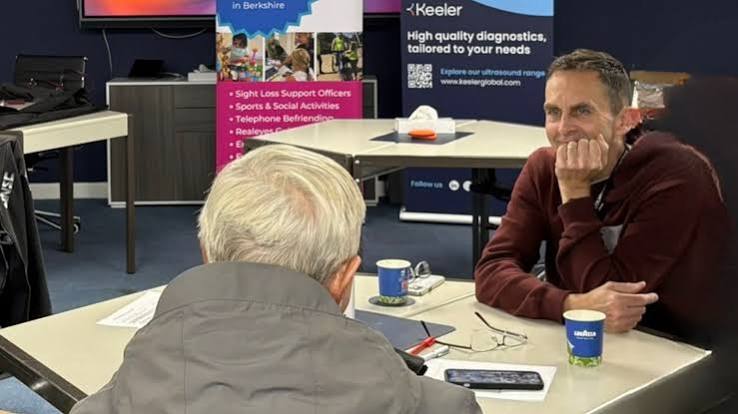
Berkshire Vision is a charitable organisation dedicated to supporting people who are blind or visually impaired throughout Berkshire. The charity provides a range of services designed to improve independence, wellbeing, and community engagement. With a small team of staff members, many working part-time, the organisation relies heavily on technology to maintain communication, coordinate services, and ensure efficient day-to-day operations for both employees and service users.
Berkshire Vision began reviewing its IT support arrangements following a noticeable decline in service quality from its incumbent managed service provider. Whilst the charity’s Microsoft 365 environment remained stable and effective, the support surrounding it had become increasingly problematic.
As a smaller charity client, the organisation felt it was receiving less attention than larger customers, resulting in slower response times, inconsistent communication, and unnecessary delays when carrying out routine administrative tasks such as onboarding new users. Combined with increasing service costs, these issues weakened confidence in the provider and placed additional pressure on staff who relied on technology to support their daily responsibilities.
The charity required a support partner that understood the realities of a largely part-time workforce and could provide consistent, accessible assistance. They were also exploring an opportunity to simplify technology management by considering the consolidation of IT support and telephony services under a single provider.
Our approach focused on delivering a highly responsive, people-first managed IT service designed specifically around Berkshire Vision’s operational model.
The organisation’s Microsoft 365 environment was assessed to ensure all users, including office staff and email-only users, received appropriate licensing and support. Existing security solutions, including Sophos and Datto services, were reviewed and incorporated into a wider managed support framework to maintain continuity and minimise disruption.
Recognising that many employees work reduced hours, we developed a support model tailored to the charity’s workforce rather than applying a standard commercial structure. This ensured the charity only paid for the services it genuinely required while maintaining full access to expert technical assistance when needed.
A telephone-first support desk was introduced to provide quick access to engineers and reduce delays often associated with traditional ticket-only support models. This was supported by proactive monitoring, regular system reviews, licensing audits, and ongoing strategic consultancy to help the organisation continuously improve its technology environment.
We also worked closely with the charity to establish a clear and structured transition plan from its existing provider. By coordinating onboarding activities, gathering key documentation, and preparing migration workflows in advance, we ensured the organisation would have a seamless route to a new support arrangement once contractual commitments had been completed.
Alongside day-to-day support, we positioned ourselves as a trusted technology partner, providing guidance, recommendations, and best practice advice that would help the charity make informed decisions as its requirements evolved.
Berkshire Vision gained a technology partner that aligned with its values and understood the operational challenges faced by charities and part-time workforces.
By receiving prompt and reliable technical support, staff were able to resolve issues more quickly and spend less time chasing updates or managing ongoing IT concerns. Routine processes such as user onboarding, licensing management, and support requests became more streamlined and efficient.
The charity benefited from greater consistency in communication, creating a stronger sense of trust and confidence in its support arrangement. Staff had a clear point of contact for assistance and could access help through a straightforward and accessible support process.
The proactive support model also helped reduce the likelihood of problems developing into larger issues, supporting service continuity and minimising disruption to employees and service users.
By consolidating strategic technology guidance alongside day-to-day support, Berkshire Vision gained access to expertise that supports both immediate operational requirements and future planning. This partnership approach enables the charity to focus on delivering vital services to its community, safe in the knowledge that its technology environment is being actively managed and supported.
- Responsive telephone-first technical support
- Support model tailored to a predominantly part-time workforce
- Simplified onboarding and user management processes
- Proactive monitoring and preventative maintenance
- Ongoing Microsoft 365 optimisation and licensing guidance
- Reduced administrative burden on internal teams